 By
By
When Standard Skips Simply Won’t Cut It
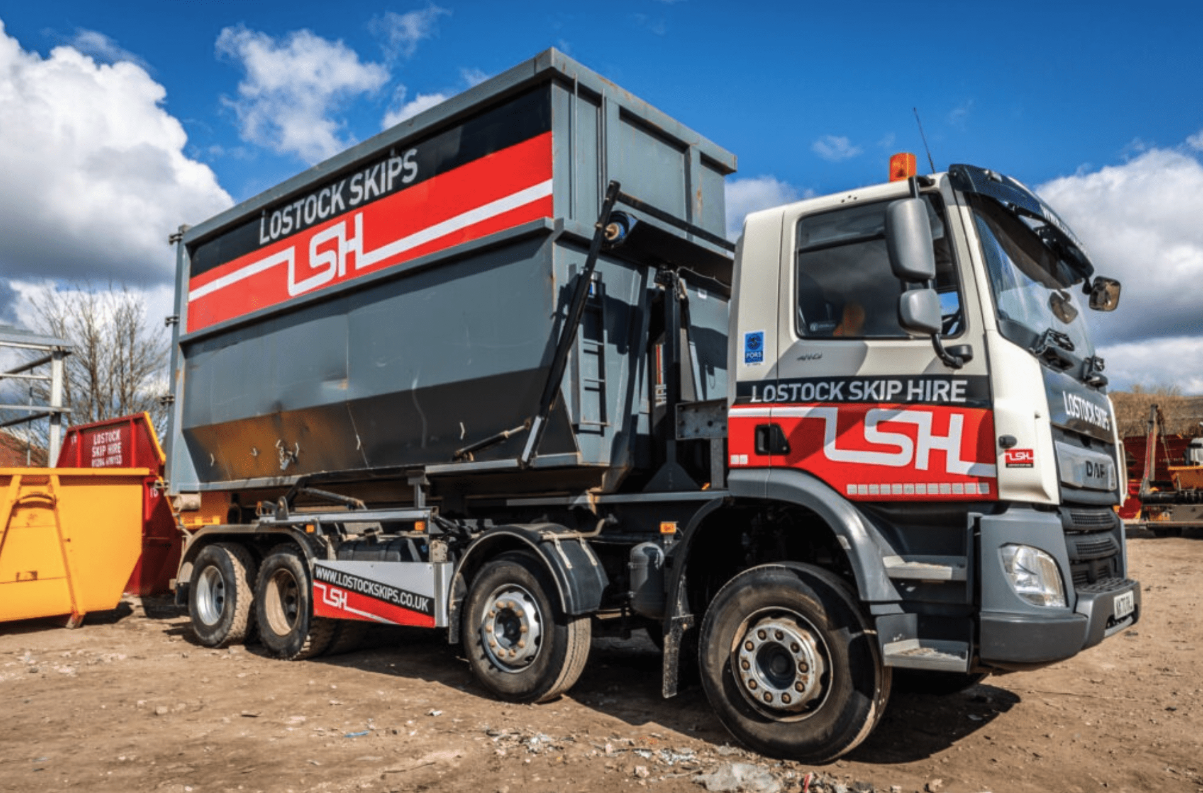
Picture a primary construction site with 15 tonnes of mixed waste, or a factory clearance where standard skips would need to be swapped three times weekly. This is where Roll-on Roll-off (RoRo) skip hire becomes indispensable. RoRo containers represent the heavy-duty solution for commercial and industrial projects that generate substantial volumes of bulky, heavy waste.
Unlike conventional skip hire that serves smaller residential and light commercial needs, RoRo skip hire addresses the challenges of major construction, demolition, and large-scale clearance projects. With capacities ranging from 20 to 40 yards, significantly larger than the typical 8-yard maximum of standard skips, these containers can accommodate approximately 350-380 black bags or up to 15 tonnes of waste in a single container.
This comprehensive guide explores when RoRo skip hire is necessary, the available capacity options, loading requirements, scheduling considerations, and cost factors that project managers and contractors must consider for successful large-scale waste management.
Before examining specific applications, it’s crucial to understand precisely what distinguishes RoRo containers from conventional skip options.
Understanding RoRo Skip Capacity: Size Matters for Large Projects
RoRo skips operate in a completely different capacity league compared to standard household or small commercial skips. The most popular configuration, the 26-yard RoRo skip, measures approximately 6.1 metres long, 2.4 metres wide, and 2.0 metres high, providing substantial volume for high-waste projects whilst remaining manageable for most commercial sites.
Key Capacity Breakdown:
- 24-yard RoRo skips: Ideal for moderate commercial clearances and smaller construction phases
- 35-yard RoRo skips: The industry standard, accommodating 350-380 black bags or 15 tonnes of mixed waste
- 40-yard RoRo skips: Maximum capacity for major demolition sites and high-volume industrial projects
The capacity advantage becomes clear when comparing waste management efficiency. Where a standard 8-yard skip might require three separate hires and collections for a major project, a single 24-yard RoRo container handles the same volume with one delivery and collection cycle. This translates to reduced site disruption, fewer permit applications for road placement, and significantly lower labour costs for waste management coordination.
Critical Sizing Consideration: Project managers should calculate peak waste generation periods rather than average volumes. Construction projects often generate waste in concentrated phases, demolition, strip-out, and finishing stages, making RoRo capacity essential for maintaining project timelines.
Understanding capacity requirements naturally leads to examining which materials these robust containers can effectively handle.
Loading Requirements: What Goes In and What Stays Out
RoRo skips excel at handling challenging materials that smaller containers cannot accommodate. Their robust construction and large back-door access make them particularly suited for bulky, awkward items that characterise commercial waste streams.
Approved Materials for RoRo Loading: The design accommodates plasterboard sheets, full-length timber, furniture, pallets, mixed general waste, rubble, soil, and industrial packaging waste. The large back doors, typically spanning the full width of the container, enable forklift truck access and easy loading of items that would require breaking down for standard skips.
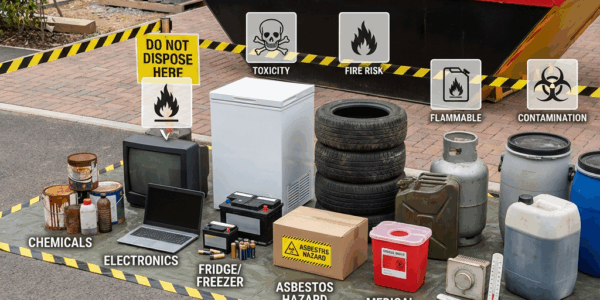
Prohibited Materials and Safety Compliance: Despite their robust construction, RoRo skips cannot accept hazardous materials, including asbestos, chemicals, gas cylinders, electrical appliances, tyres, or medical waste. These restrictions stem from legal disposal regulations and safety considerations during transportation and processing.
Dense materials such as rubble and soil should be loaded first, creating a stable base for lighter, bulkier items. This loading sequence optimises weight distribution and prevents shifting during transportation. Additionally, waste should not exceed the container rim to comply with road safety regulations and avoid additional charges.
Many contractors underestimate the volume of packaging waste from large projects, cardboard, plastic wrapping, and pallets can fill significant container space alongside primary project waste.
With materials identified, timing and scheduling become critical factors for project efficiency.
Scheduling Solutions: Flexible Timing for Project Demands
RoRo skip hire scheduling operates on commercial timescales, recognising that large projects require extended access and flexible collection timing. This represents a significant departure from residential skip hire patterns and aligns with complex project logistics.
Standard hire periods typically span seven to fourteen days and are included in base pricing. This extended timeframe accommodates the natural rhythm of significant projects, where waste is generated in phases rather than continuously. Projects requiring longer access can arrange extensions, though additional daily charges apply after the included period.
Professional RoRo providers offer same-day, next-day, and wait-and-load services to match project timelines. Wait-and-load services prove particularly valuable for projects with immediate clearance requirements or limited space for container storage. This flexibility ensures continuous project progression without waste management becoming a bottleneck.
Extended hire periods eliminate the frequent skip-swapping required with smaller containers, reducing site disruption and labour coordination time. Projects maintain momentum without pausing for waste collection, whilst fewer vehicle movements minimise environmental impact and traffic management complications.
Successful RoRo scheduling aligns container placement with high-waste project phases, demolition, strip-out, or final clearance stages, maximising efficiency and minimising costs through optimal timing.
Understanding scheduling advantages leads to evaluating the financial aspects of RoRo skip hire investment.
Cost Considerations: Investment vs. Value for Large Projects
RoRo skip hire represents a significant investment compared to standard skip options. Still, the cost analysis must consider project-wide efficiency gains and comparative disposal methods for large-volume waste management.
RoRo skip hire costs vary based on container size, location, hire duration, and waste type. In major metropolitan areas like London, pricing ranges from £300-£500+ for larger containers, with permit costs adding £50-£150 depending on local council regulations for road placement.
When compared to multiple standard skip hires, RoRo containers often provide superior value. A 30-yard RoRo skip replacing three 8-yard standard skips eliminates duplicate delivery charges, reduces labour coordination time, and minimises permit applications. The cumulative savings from fewer collections, reduced fuel costs, and decreased administrative overhead frequently justify the higher upfront investment.
Certain waste types incur supplementary charges; plasterboard disposal, mattresses, and hazardous materials require specialised processing. However, RoRo containers’ capacity makes these additional costs more economical when spread across larger volumes.
Factor permit costs early in project planning, as road placement permits can require several weeks for approval and represent unavoidable additional costs for projects without private placement options.
Cost considerations naturally lead to determining specific project scenarios where RoRo hire becomes essential.
When RoRo Skip Hire Becomes Essential
Specific project types make RoRo skip hire not just beneficial, but practically essential for efficient completion. Major construction sites generating mixed waste streams, combining timber, plasterboard, packaging, and general debris, require the volume capacity that only RoRo containers provide.
Factory and warehouse clearances represent ideal RoRo applications, where pallets, machinery, packaging, and bulk materials would overwhelm standard skip capacity. Similarly, demolition projects producing large volumes of rubble, fixtures, and structural materials need containers capable of handling both weight and volume simultaneously.
Project Scale Indicators: Projects employing more than five workers, construction phases spanning several weeks, or clearances involving entire buildings typically generate waste volumes exceeding standard skip capacity. When project managers find themselves calculating multiple standard skip requirements, RoRo hire often provides superior efficiency.
Consider RoRo hire when waste disposal coordination begins to consume significant management time, or when skip-swapping frequency threatens adherence to the project timeline.
Making the correct choice requires understanding how to select and implement RoRo solutions effectively.
Making the Right Choice for Your Large-Scale Project
RoRo skip hire is an essential tool for professional waste management on large-scale commercial, construction, and industrial projects. With capacities up to 40 yards, flexible scheduling spanning 7-14 days, and robust construction suitable for heavy-duty materials, these containers address the specific challenges that standard skip solutions cannot.
The investment in RoRo skip hire pays dividends through reduced project disruption, fewer collection cycles, and efficient handling of bulk materials. When facing projects generating 15+ tonnes of waste, multiple bulky items, or extended clearance phases, RoRo containers provide the professional solution that keeps major projects moving forward efficiently and cost-effectively.
For expert advice on RoRo skip hire solutions tailored to your specific project requirements, contact experienced waste management professionals who can guide you through capacity selection, scheduling, and prepare your property for delivery planning.
Frequently Asked Questions
What’s the difference between RoRo skips and standard skips? RoRo skips are significantly larger (20-40 yards vs 8 yards maximum), designed for commercial projects, and offer extended hire periods of 7-14 days. They feature back-door access for more effortless loading of bulky materials.
How much waste can a 30-yard RoRo skip hold? A 30-yard RoRo skip can accommodate 350-380 black bags or up to 15 tonnes of mixed waste, equivalent to approximately three standard 8-yard skips.
What materials cannot go in RoRo skips? Prohibited materials include asbestos, chemicals, gas cylinders, electrical appliances, tyres, and medical waste due to legal disposal regulations and safety considerations.
How long can I keep a RoRo skip? Standard hire periods are 7-14 days and are included in base pricing, with extensions available at an additional daily charge. This accommodates the natural phases of large commercial projects.
Are RoRo skips cost-effective for large projects? Yes, compared to multiple standard skip hires, RoRo containers often provide better value through lower delivery charges, fewer collections, and shorter labour coordination time.