By
By
Avoid Common Pitfalls in Construction Skip Hire Services
Construction Skip Hire – Construction waste is not just “part of the job.” If it is not managed correctly, it can drag your entire project down.
On a live site, waste accumulates quickly. Bricks, blocks, timber offcuts, packaging, hardcore, soil, plasterboard, metals, plastics, and general rubbish all compete for space with plant and people. If you do not stay on top of it, you end up with blocked access routes, materials stacked where they should not be, and trades tripping over piles that should already be off-site.
Common construction waste problems
- Site clutter and blocked access. Materials and waste fight for the same footprint. Skips that are too small or collected too late result in overspill, messy piles, and longer walks to dispose of waste. That means slower progress and more manual handling.
- Unsafe working areas. Loose rubble, nails, plasterboard, and packaging around work zones increase the risk of slips, trips, and cuts. Poorly positioned or overfilled skips can also create blind spots for plant and delivery vehicles.
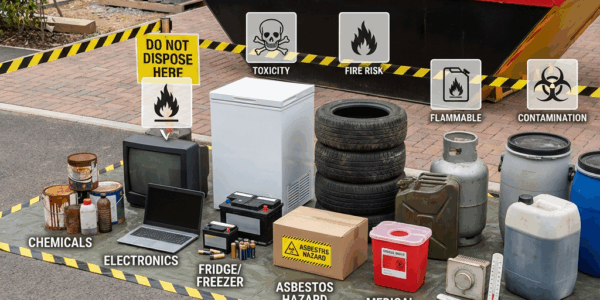
- Hazardous or tricky waste. Materials such as plasterboard, insulation, contaminated soil, asbestos, gas bottles, and certain liquids require careful handling and specialist routes. If these end up mixed in general skips, you risk additional charges, rejected loads, or, worse, non-compliant disposal.
- Poor segregation. If everything goes into one heap, it is harder to recycle and can cost more to dispose of. Unplanned segregation or insufficient briefing leads to confusion and wasted effort.
Compliance pressure in the UK
Every contractor in the UK has a legal duty of care over the waste that leaves their site. That includes how it is stored, transported and processed. If waste is handled by an unregistered carrier or illegally dumped, the responsibility can still fall back on you.
Incorrect paperwork, missing waste transfer notes, or the wrong material in the wrong container can all trigger enforcement action. For many teams, this sits on top of everything else they are juggling, which is why waste often becomes reactive instead of planned.
How poor waste management slows projects and raises risk
- Delays to the programme Trades spend time moving rubbish out of the way or waiting for an overdue skip exchange. Access for deliveries and plant is reduced, which eats into working hours.
- Higher safety risk: Cluttered walkways, blocked fire exits, and poor visibility around skips all increase the risk of incidents. That can stop work and trigger inspections.
- Hidden extra costs: Extra labour for tidying, repeat tip runs in vans, aborted deliveries and potential fines all hit the job margin.
A structured skip hire plan turns waste into a controlled process rather than a constant headache, so your team can focus on building rather than clearing up.
Choosing the Right Skip Hire Service
If you get the skip size or waste type wrong, you incur extra charges, waste space, or skips that fill halfway through the day. A bit of planning at the start keeps waste moving and the site clear.
Match skip size to the job.
Think in terms of project scale and on-site access.
- Small refurbishments and strip-outs. Compact skips work well in tight spaces or where access is limited. Ideal for light builders’ waste, packaging and general rip-out material.
- Standard builds, extensions and refit. General builders skip suit mixed construction waste and cope with a steady flow from trades across a few phases.
- Larger sites and ongoing projects: larger container sizes or roll-on, roll-off units keep heavy, bulky waste moving without frequent exchanges.
A practical rule is to size up if you are unsure. Overfilling is not allowed, so a slightly larger skip is usually cheaper than arranging extra collections.
If you want more detail on typical skip capacities, a guide like what size skip do I need can help you map skip sizes against everyday construction tasks.
Know what waste you are putting in.
A good provider will guide you to the appropriate skip type for each waste stream. Typical categories are:
- General construction waste, Mixed light builders’ waste such as timber, plastics, metals, packaging and non-hazardous materials.
- Hardcore and rubble, Bricks, blocks, concrete and tiles. Heavy loads usually need dedicated skips and must not be mixed with large volumes of light waste.
- Soil and inert waste are, often kept separate from general mixed waste.
- Recyclable streams: Segregated metal, timber, or cardboard can help meet recycling targets and may reduce disposal costs.
Some materials are restricted or need separate handling, such as plasterboard, certain insulations, contaminated soils and specific hazardous items.
A provider that understands construction will give clear lists of what can and cannot go in each container and will offer routes for restricted waste, not just leave you to figure it out.
Why the right skip partner matters
A skip firm that works with construction teams day in, day out will:
- Understand phasing so sizes and collections align with your programme.
- Advise on skip positions that do not block access or clash with the plant.
- Set up the right mix of skips so segregation is practical, not a headache.
- Help you stay compliant, from waste types to paperwork.
The result: Less time on the phone sorting waste, fewer surprises on the invoice, and a site that stays workable from first fix through to handover.
Navigating Permits and Compliance
UK skip permits and waste regulations can seem complex, but once you break them down, they are straightforward to navigate. The key is to plan early so permits and paperwork do not become the reason a job stalls.
When you need a skip permit
You usually need a permit if the skip is placed on a public road, pavement, or verge. If it is entirely within private land, such as a site compound, yard or driveway, a permit is usually not required.
Local councils set their own permit rules and charges. Common requirements include:
- Ensure the skip is placed correctly so it does not block junctions, driveways, or pedestrian routes.
- Safety features such as lights, markings and cones at the edges.
- A set permit period with clear start and end dates.
A good skip provider will generally apply for the permit on your behalf and advise on timings. For areas like Bolton, Preston, Chorley and Wigan, there are clear guides such as the main skip permit information, which walk you through local rules.
Your legal responsibilities for waste
Whoever arranges the skip has a legal duty of care over the waste. That covers:
- Storing waste safely on site, with sensible segregation.
- Using a registered carrier and an authorised disposal or recovery site.
- Keeping correct waste transfer notes or digital records.
You are expected to verify that your skip company is registered correctly and that restricted materials are routed through the correct channels. If waste is mishandled or improperly disposed of, authorities can trace it back to the producer.
Why a registered waste carrier matters
Using a registered waste carrier takes most of the compliance pressure off your team. A professional operator will:
- Provide their registration details so you can record them for your files.
- Supply waste transfer notes that match the waste types you are producing.
- Advise on what can, and cannot, go in each skip so you avoid rejected loads.
- Route waste through licensed sites that prioritise recovery and recycling.
The benefit is simple. You keep inspectors, neighbours and the council on side, reduce the risk of fines or stop notices, and keep the project moving without last-minute scrambles to fix paperwork.
Maximising Site Efficiency with Skip Hire
When skips are delivered, filled and exchanged in line with your programme, waste stops getting in the way and becomes just another planned activity. The aim is simple, keep trades moving and keep the site clear.
Why timing matters to workflow
A skip turning up late, or sitting full for days, ripples across the job. Labour that should be on install spends time double-handling waste, plant routes get blocked and deliveries struggle to reach drop points.
Work with your skip provider to map deliveries and exchanges against your build stages. For example, you might schedule:
- Initial skips for strip out or clearance at the very start of the programme.
- Regular exchanges during heavy waste phases such as masonry, roofing and first fix.
- Smaller, more frequent exchanges during finishing stages, when space is tighter and access routes are critical.
Agree clear booking cut off times and preferred time slots so your team knows when to have waste ready and when to expect wagon movements. For more detailed planning, tools like a simple skip hire period guide can help you decide whether shorter or longer hire windows fit each phase.
Smart skip placement on a live site
Where you put the skip affects everything from loading time to traffic management. As a starting point, check against these points:
- Distance from work areas Keep skips close enough to reduce walking and manual handling, but not so close that they block scaffold, plant routes or fire exits.
- Ground conditions Place on firm, level ground that can take the weight of both the skip and the wagon.
- Vehicle access Make sure wagons can get in, swing and lift without clashing with overhead lines, scaffolds or parked vehicles.
- Segregation layout If you use more than one skip, group them in a simple, logical layout so operatives are not guessing where to put each waste type.
A provider used to construction work will often advise on positioning and may ask for site access notes or a simple sketch before delivery.
Using skips efficiently day to day
Once the skips are on site, a few small habits keep things efficient and safe.
- Brief each trade on which skip takes which waste, with simple signage on the containers.
- Do not overfill, keep waste below the marked level so collections are not refused.
- Load evenly, heavy items at the bottom and lighter at the top, to keep the skip stable.
- Keep access clear around the skip so operatives are not lifting over barriers or working in traffic routes.
- Nominate someone on site to monitor fill levels and trigger swap requests before the skip is at capacity.
When delivery, placement and use are planned together, skips support the programme instead of fighting it. You cut wasted motion, reduce trip hazards and keep the focus on productive work, not chasing waste.
Safety Considerations and Environmental Responsibility
On a busy construction site, a skip is a work tool, not just a bin. If you position it badly or use it carelessly, it quickly turns into a safety hazard and a compliance problem. With a bit of structure, it does the exact opposite, it helps you control risk and keep waste moving in line with UK regulations.
Safe skip use on live sites
Start by treating the skip area like any other work zone.
- Clear access routes Keep walkways and plant routes to the skip free of debris, cables and stored materials. Operatives should not need to step into traffic or climb over barriers to reach it.
- Stable, level ground Place skips on firm ground that can take the loaded weight and the collection vehicle. Avoid soft verges and uneven surfaces that can lead to movement or tipping.
- No overfilling Waste should sit within the top line of the container. Overfilled skips are unsafe to transport and are more likely to spill, attract windblown debris and fail basic safety checks.
- Clear signage Mark each skip with simple, weatherproof signs that match your waste streams. This reduces guesswork and stops operatives leaning in to check contents.
- Good lighting If you are working during darker hours, make sure the skip area is lit so drivers, plant operators and pedestrians can see edges and trip risks.
- Traffic management Plan wagon movements into your site traffic plan. Keep people out of the lifting zone during collections and deliveries.
For a more detailed safety checklist, resources such as a dedicated skip hire safety guide are useful for briefing site teams.
Waste segregation that actually works
Environmental responsibility on site is not complicated, but it does need structure. UK waste regulations expect you to prevent, reuse and recycle where practical, and to keep different waste types separate where it is sensible to do so.
On most construction projects, effective segregation comes down to three points.
- Plan your streams Decide in advance which waste types you will separate, for example general mixed construction waste, inert hardcore, soil, timber or metals. Match this to a realistic number of skips that your footprint can handle.
- Keep it simple for operatives Use clear labels, colour coding or basic symbols so anyone on site can see what goes where without reading long notices. Back this up with a quick toolbox talk when new trades start.
- Control restricted items Hazardous or tricky wastes, such as certain insulations, contaminated soils or gas bottles, should never be dropped into general skips. Set up a separate holding area and agreed route with your provider.
When segregation is planned into site logistics, it supports your Environmental Management Plan instead of fighting it. Your skip partner can then route each stream to the most suitable recycling or recovery facility, which reduces landfill and keeps you on the right side of UK expectations for responsible disposal. If you want broader guidance on good practice, content on construction waste management best practices can help you tighten up your approach across multiple projects.
The payoff is straightforward. Safer working areas, cleaner site presentation, less wasted labour, and a clear line of sight that what leaves your gate is handled properly, not just dumped and forgotten.
Benefits of Professional Construction Skip Hire
When you use a professional construction skip hire service, waste stops being a constant firefight and becomes a straightforward, planned process. That takes pressure off your supervisors and lets trades focus on what they are actually there to do, building.
Less admin, more time on the job
Sorting waste carriers, checking registrations, chasing late collections and fielding calls about blocked access all eat into your day. A reliable skip partner handles most of that in the background.
- Single point of contact One call or online booking instead of piecing together ad hoc collections.
- Pre planned deliveries and exchanges Agreed slots that fit your programme so you spend less time rearranging labour.
- Simpler paperwork Clear invoices and waste transfer notes that match your site and project references.
With less time spent on admin, your site managers can stay on the deck, not stuck at a desk sorting rubbish logistics.
Legal peace of mind
A competent skip hire provider understands UK duty of care rules and environmental expectations. That takes away a lot of the doubt about whether your waste is being handled correctly once it leaves the gate.
- Registered waste carrier status, so you can record details for your files and audits.
- Correct routing of different waste types, in line with UK regulations.
- Support with restricted materials, backed by clear information such as a guide to prohibited items and alternatives.
This reduces the risk of fines, stop notices and awkward questions from inspectors, because you can show a clear trail of compliant disposal.
Cleaner, safer, more efficient sites
Professional skip hire is not just about where the waste ends up. It has a direct impact on day to day site conditions.
- Regular clearances Planned exchanges keep access routes open and reduce piles of loose waste that trip people up.
- Right skips for each waste stream Segregation is easier, which helps both safety and environmental performance.
- Guidance on loading Practical advice, supported by resources such as a simple how to load a skip guide, keeps skips stable and safe for transport.
The benefit on site is clear. Less clutter, smoother vehicle movements, fewer aborted collections and a team that can get on with the job without constantly working around waste. Professional skip hire turns waste from a drag on your programme into a routine part of the build process that you barely need to think about.
Getting Started with Skip Hire on Your Construction Project
Sorting skip hire early means waste does not slow the job down later. Use this practical checklist to plan your skips before the first load of waste hits the deck, or to get control back on a live site.
1. Assess what waste you will generate
Start with your programme and drawings, then work out the main waste streams for each phase.
- List key activities, for example strip out, groundworks, masonry, roofing, fit out.
- Note typical waste types for each phase, such as hardcore, soil, timber, packaging, plasterboard, metals.
- Estimate volume using simple measures, for example number of rooms stripped, cubic metres of excavation or pallet loads of materials.
- Decide which streams you will keep separate, such as inert hardcore or soil.
If you want help translating volumes into skip sizes and durations, a guide such as the skip hire period guide is a useful planning tool.
2. Choose skip sizes, numbers and locations
- Match skip sizes to phase, compact for light, short works, larger units for heavy or ongoing waste.
- Check physical access for wagons, including road width, turning space and overhead obstructions.
- Identify safe, level standing areas that do not block plant, fire exits or deliveries.
- Plan a simple layout if you use more than one skip, with clear separation between waste streams.
Fix at least a provisional schedule for deliveries and exchanges that ties to your main programme milestones.
3. Sort permits and compliance
- Decide whether any skips will sit on a public road or pavement.
- If yes, confirm who will handle the permit application, you or the skip provider.
- Record the provider’s waste carrier registration details for your project file.
- Agree how restricted items, such as certain hazardous or specialist wastes, will be handled.
4. Book in and brief your site team
- Place bookings early, with clear dates, time windows and site contact details.
- Send the provider a simple access note or sketch if the site is tight or complex.
- Brief supervisors and trades on which skip takes which waste.
- Nominate a site lead to monitor fill levels and request exchanges before skips are completely full.
Resources such as the online skip booking guide can help you set a repeatable process that works across multiple projects.
Once this checklist is in place, skip hire becomes routine. Waste leaves site on time, paperwork lines up with your records, and your team spends its energy on delivery, not chasing collections.