 By
By
Skip Hire Safety: Essential Guide for First-Time Users
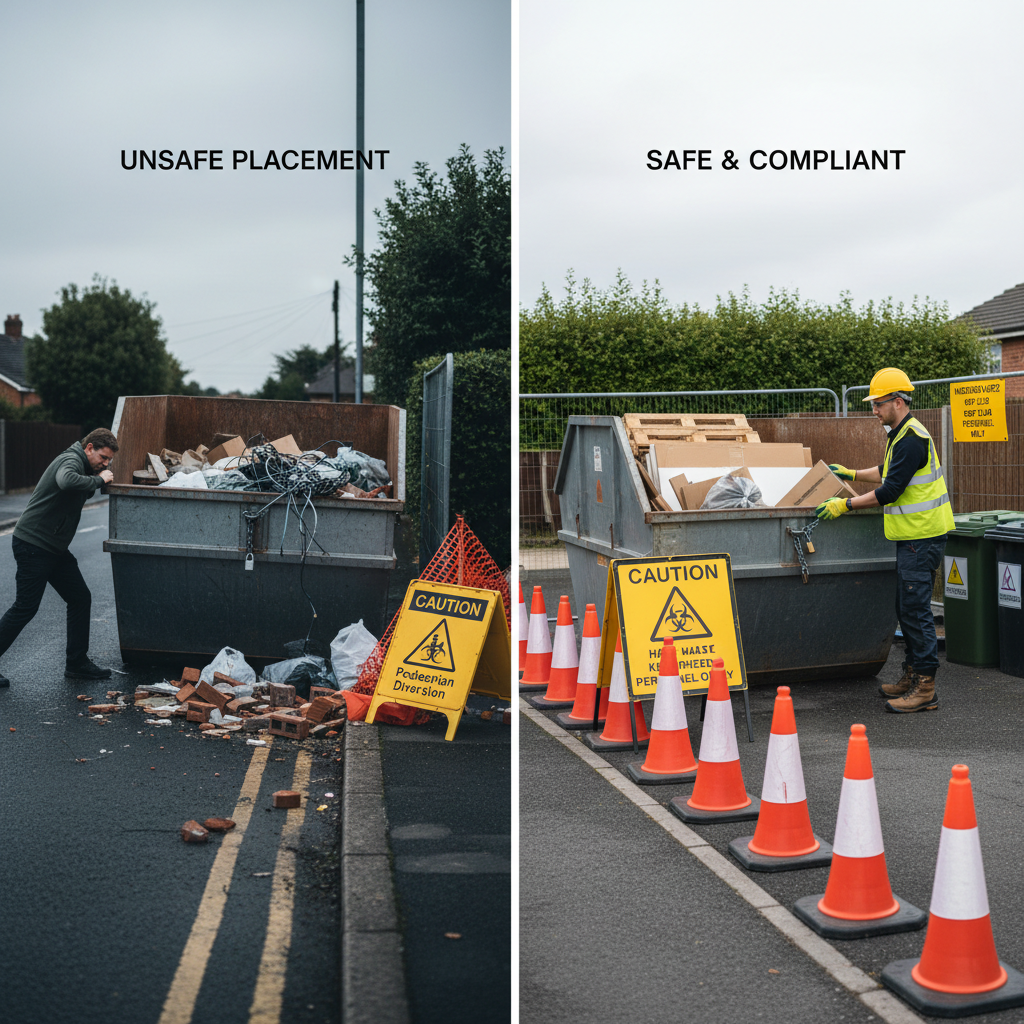
Skip Hire Safety: Essential Guide for First-Time Users – First-time skip hire can seem straightforward, but improper handling creates serious risks—from personal injury to legal liability. Consider this scenario: a homeowner’s renovation project turns into a costly liability claim when their poorly placed skip causes a pedestrian accident. This situation could have been avoided with proper safety knowledge.
This comprehensive guide addresses the four critical areas of skip hire safety that every newcomer must understand: strategic placement, proper loading techniques, hazardous waste identification, and site security measures. Whether you’re clearing a garden or managing a small renovation, these safety principles will protect you, your property, and the public whilst ensuring compliance with UK regulations.
Strategic Skip Placement: Location Makes All the Difference
Ground Requirements and Structural Considerations
Proper ground preparation prevents skip-related accidents and property damage. Skips require sturdy, level surfaces capable of supporting both the container’s weight and collection vehicle access. Soft or uneven ground can cause skips to shift unexpectedly, creating hazards during loading.
Key ground requirements:
- Level, firm surfaces (concrete drives, tarmac, or well-compacted ground)
- Adequate drainage to prevent waterlogging
- Surface capable of supporting 15-20 tonnes (including collection vehicle weight)
- Clear overhead space (minimum 5 metres for crane access)
Avoid placing skips on freshly laid surfaces, steep gradients, or areas prone to ground movement. Consider using protective boards beneath the skip to distribute weight and prevent surface damage—particularly important on block paving or decorative surfaces.
Check underground utilities before placement. Contact your local council’s “Plant and Apparatus Records” service to identify gas, water, or electrical lines that could be damaged by heavy vehicles. Poor ground preparation accounts for 30% of skip-related property damage claims.
Traffic and Pedestrian Safety Zones
Skip placement must prioritise public safety whilst maintaining accessibility. Understanding traffic flow and pedestrian patterns around your property prevents accidents and ensures legal compliance.
Prohibited placement areas:
- Within 10 metres of road junctions or roundabouts
- Near bus stops or taxi ranks
- On narrow streets where emergency vehicles cannot pass
- Adjacent to schools or high-traffic pedestrian areas
- Blocking sight lines for drivers or pedestrians
The 10-metre rule from buildings isn’t just good practice—it’s often legally required. This distance ensures emergency vehicle access and prevents structural damage from collection vehicle movements.
When placement on public roads becomes necessary, skip hire providers typically arrange council permits and provide appropriate lighting and reflective markings. However, you remain liable for ensuring the skip doesn’t create hazards beyond normal placement requirements.
Consider local traffic patterns: morning school runs, delivery schedules, and peak traffic times all affect safe placement. A skip that seems well-positioned at midday might block essential access during busy periods.
Safe Loading Techniques: Protecting Yourself and Others
Personal Protective Equipment and Manual Handling
Loading skips safely starts with appropriate protective gear and proper lifting techniques. Manual handling injuries are the most common skip-related accidents, yet they’re entirely preventable with correct procedures.
Essential protective equipment:
- Work gloves (tear-resistant, not fabric gardening gloves)
- Safety goggles or glasses
- Sturdy footwear with ankle support and non-slip soles
- Dust masks when handling dusty materials
- High-visibility clothing if working near roads
Safe lifting protocols follow the “TILE” principle:
- Task: Assess what you’re lifting and plan your approach
- Individual: Consider your physical capabilities and limitations
- Load: Check weight, size, and potential hazards
- Environment: Ensure clear pathways and stable footing
Bend at the knees, not the waist. Keep loads close to your body and avoid twisting movements. For items over 25kg, use mechanical aids or get assistance. The Health and Safety Executive reports that poor manual handling causes over 30% of workplace injuries—the same risks apply to domestic skip loading.
Never climb into skips or stand on the edges. The sides aren’t designed to support human weight, and falls can cause serious injury.
Load Distribution and Capacity Management
Proper load distribution ensures safe transport and prevents spillage hazards. Overfilled or unbalanced skips create risks during collection and can result in additional charges or refused collection.
Effective loading strategy:
- Place heaviest items at the bottom as a stable foundation
- Distribute weight evenly across the skip’s base
- Fill gaps with smaller items to prevent shifting during transport
- Keep all waste below the skip’s rim—the “fill line”
- Break down large items to maximise space efficiency
Never exceed the skip’s sides or marked fill line. Overloaded skips violate road transport regulations and create spillage hazards. Collection drivers have the right to refuse overloaded skips, leaving you with continued hire charges until properly loaded.
Balance is crucial: avoid loading all heavy materials on one side, which can cause instability during lifting. Weather protection matters—cover skips during rain to prevent additional weight from waterlogged materials and use sheeting during windy conditions to prevent light materials becoming airborne.
Hazardous Materials: Identification and Safe Handling
Identifying Prohibited and Dangerous Items
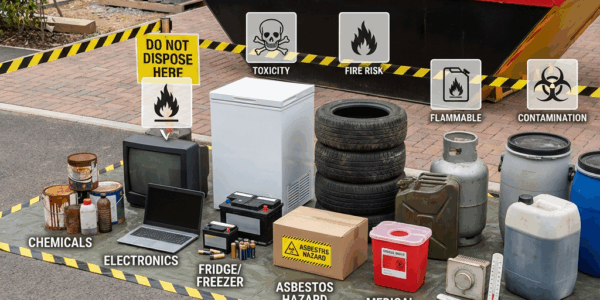
Hazardous waste identification prevents environmental damage, protects collection crews, and avoids legal penalties. Many common household items qualify as hazardous waste and require specialist disposal routes.
Commonly prohibited items include:
- Liquid paints, solvents, and chemicals
- Batteries (car, household, and rechargeable)
- Electrical items containing hazardous components
- Asbestos-containing materials
- Medical or clinical waste
- Explosive or flammable substances
- Pesticides and garden chemicals
High-risk categories requiring specialist handling:
- Asbestos: Any pre-1980s building materials should be professionally assessed
- Chemicals: Garden treatments, cleaning products, automotive fluids
- Electronics: Items containing mercury, lead, or lithium components
- Pressurised containers: Aerosols, gas bottles, fire extinguishers
The Environmental Protection Act 1990 makes improper hazardous waste disposal a criminal offence, with fines up to £50,000 and potential imprisonment. Even small quantities mixed with general waste can contaminate entire loads, creating disposal problems and additional costs.
When in doubt, contact your local council’s hazardous waste disposal service or arrange specialist collection. Many councils offer free hazardous waste collection days specifically for domestic users. Improper hazardous waste disposal accounts for over £2 million in annual clean-up costs across UK councils.
Safe Handling and Segregation Practices
When hazardous materials are properly identified, safe handling and storage become priorities until appropriate disposal can be arranged.
Safe handling protocols:
- Wear appropriate protective equipment for each substance type
- Keep hazardous materials in original containers where possible
- Store separately from general waste in secure, ventilated areas
- Label containers clearly to prevent accidental mixing
- Maintain safety data sheets for complex chemicals
Never attempt to empty hazardous materials into general waste or pour liquids down drains. This practice pollutes water systems and violates environmental regulations.
For renovation projects likely to encounter asbestos, arrange professional assessment before starting work. Disturbing asbestos without proper precautions creates serious health risks and legal liabilities.
Create a hazardous waste inventory for larger projects, noting quantities and types for proper disposal planning.
Site Security: Preventing Unauthorised Access and Fire Hazards
Physical Security Measures
Skip security prevents unauthorised dumping, reduces fire risks, and maintains site safety standards. Unsecured skips attract illegal dumping, potentially making you liable for disposal costs and environmental violations.
Effective security options:
- Lockable skip lids (available on most skip sizes)
- Heavy-duty tarpaulins secured with bungee cords
- Temporary fencing around the skip area
- Motion-activated lighting for evening security
- Clear signage indicating private use
Lockable lids offer the best protection, particularly for extended hire periods or when skips contain valuable materials. If lockable skips aren’t available, secure tarpaulins provide weather protection and deter casual dumping.
Position skips within sight of occupied buildings where possible. Natural surveillance reduces unauthorised access and enables quick response to security issues.
Consider the contents when choosing security measures. Skips containing metals, electronics, or other valuable materials require enhanced security to prevent theft. Document skip contents with photographs for insurance purposes, particularly for business use or high-value waste disposal.
Emergency Access and Fire Prevention
Maintaining emergency access and preventing fire hazards are legal requirements that protect lives and property.
Essential emergency considerations:
- Never block emergency exits, fire escapes, or assembly points
- Maintain minimum 3-metre clearance for emergency vehicle access
- Keep fire hydrants and emergency equipment accessible
- Avoid placing combustible materials in unsecured skips
- Ensure mobile phone coverage for emergency calls
Fire prevention requires particular attention during dry weather or when handling combustible materials. Unsecured skips containing wood, paper, or other flammable waste present arson risks. Even non-combustible waste can fuel fires started by carelessly discarded cigarettes or deliberate ignition.
Communicate emergency procedures with all site users. Ensure everyone knows emergency contact numbers and evacuation routes. For business premises, update fire safety assessments to reflect temporary skip placement.
Regular safety checks throughout the hire period identify developing hazards before they cause problems.
Professional Skip Hire Services: Safety Support and Expert Guidance
Professional skip hire companies provide comprehensive safety support throughout your project, removing much of the complexity from first-time users. Established providers offer expert advice on placement, permit requirements, and safe loading practices—knowledge developed through thousands of successful hires.
Professional safety services typically include:
- Site assessment and placement recommendations
- Permit applications and council liaison
- Safety briefings and loading guidance
- Emergency contact support throughout the hire period
- Collection scheduling flexibility to match project timelines
The standard 15-day hire period allows ample time for safe, methodical loading without rushing. This extended timeframe reduces pressure to make hasty decisions that compromise safety. When projects overrun, flexible extension options maintain safety standards rather than forcing hurried completion.
Expert guidance proves particularly valuable for hazardous waste identification and alternative disposal arrangements. Professional skip hire companies maintain relationships with specialist waste processors, enabling safe disposal of materials that cannot go in general skips.
WhatsApp collection booking systems provide convenient communication for collection timing—ensuring skips are collected promptly once filled, reducing security risks and site hazards. This modern approach to customer service maintains safety standards whilst offering the convenience that busy project schedules demand.
Coverage across 365 square miles demonstrates the logistical expertise required for safe, reliable skip services. This extensive reach, combined with local knowledge of council requirements and traffic patterns, ensures optimal placement and hassle-free collection across Lancashire and Greater Manchester.
Building Your Safety-First Approach
Skip hire safety requires attention to four interconnected areas: strategic placement, proper loading, hazardous waste management, and site security. Each element contributes to overall safety and legal compliance.
Start every skip hire project with a safety assessment covering placement options, waste types, and security needs. This planning prevents most common problems before they develop. Remember that you remain responsible for skip safety throughout the hire period, even when collection seems routine.
The small investment in proper safety measures—protective equipment, secure placement, appropriate security—prevents much larger costs from accidents, fines, or liability claims.
Most importantly, when uncertain about any safety aspect, consult your skip hire company or relevant authorities. Professional guidance costs far less than remedying safety failures. Your first skip hire sets the foundation for future projects—make it safe, legal, and successful.