 By
By
How to Prepare Your Property for Skip Delivery: A Complete UK Guide
Hiring a skip is one of the quickest ways to clear waste, whether you’re tackling a home renovation, garden overhaul or full house clearance. But many first-time customers underestimate what’s required before the skip truck arrives. A lack of preparation can lead to failed deliveries, property damage, safety risks and unexpected charges.
This guide walks you through everything you need to do to prepare your property for skip delivery, ensuring a smooth, safe, and fully compliant process.
1. Check Access for the Skip Delivery Truck
Before anything else, confirm whether the skip lorry can safely reach your property. Skip trucks are large, heavy vehicles with limited manoeuvrability.
Minimum access requirements:
• Width: at least 3 metres
• Height: 3.5 to 4 metres clearance
• Depth: approx. 6 metres for reversing and placing the skip
• Turning circle: enough space for the truck to manoeuvre
Remove obstacles:
• Move vehicles
• Open gates
• Trim back hedges
• Remove bins, trailers, pallets, or low walls
Road access issues to consider:
• Steep driveways
• Weight-restricted roads
• Narrow terraced streets
• Newly laid tarmac or resin
• Muddy or icy rural tracks
If access is tight, roadside drop-off with a council permit may be required.
2. Prepare a Suitable Area for the Skip
Your chosen skip location must be safe and able to handle weight.
Driveways vulnerable to damage:
• Block paving
• New resin
• Pattern-imprinted concrete
• Tarmac less than six months old
• Soft ground or grass
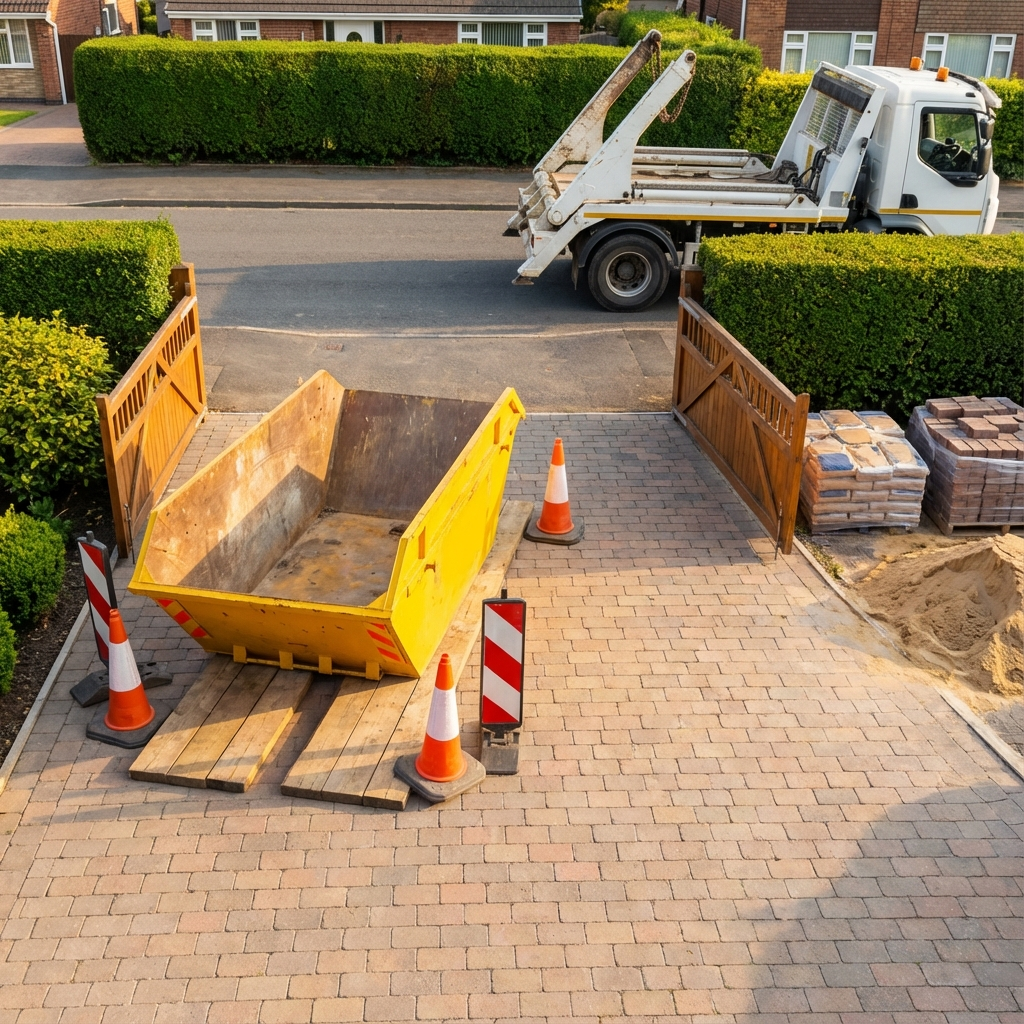
How to protect surfaces:
• Lay wooden boards, scaffold planks or sleepers
• Use OSB or plywood sheets
• Use protective rubber mats
Avoid placing the skip on slopes where it could move.
3. Think About Safety and Visibility
A poorly placed skip can create hazards. To keep things safe:
Avoid blocking:
• Shared driveways
• Garage doors
• Public footpaths
• Neighbouring parking
• Bin collection routes
If the skip is near a public road, ensure visibility with safety cones, reflective markers and night lights.
4. Neighbour and Community Considerations
Inform neighbours if:
• You live on a tight street
• Delivery vehicles need to manoeuvre near their property
• The skip could limit parking or shared access
On terraced streets, you may need to reserve space with your own vehicles or cones.
5. Check Permit Requirements (If Placing a Skip on a Public Road)
If you cannot place a skip on the driveway, it will need a council permit for placement on the road.
Key points:
• Your skip company can apply for you
• Permits take 1–5 working days
• Some areas need extra steps such as parking suspensions
Failure to arrange permits can result in fines.
6. Prepare the Site for Loading
Ensure the area around the skip is clear.
Before delivery:
• Remove debris
• Ensure a clear walking space
• Avoid placing skips under scaffolding unless agreed
• Ensure access for wheelbarrows
Choose a position close to the work area but away from windows.
7. Understand What Can and Cannot Go in the Skip
Prohibited items include:
• Fridges and freezers
• Paint and solvents
• Oils and fuel
• Electrical items
• Gas cylinders
• Tyres
• Asbestos
• Clinical waste
• Batteries
Heavy waste restrictions apply to larger 8–12 yard skips due to weight limits.
8. Prepare for Delivery Day
Before delivery:
• Be on-site or contactable
• Clear the driveway
• Check weather conditions
• Keep children and pets indoors
Last-minute access issues often cause failed deliveries.
9. Common Delivery Problems and How to Avoid Them
Typical issues:
• Cars blocking access
• Soft ground causing sinking
• Overhanging trees or wires
• Skip too large for the driveway
• No permit arranged
Always check access, weight limits and ground protection in advance.
10. Final Pre-Delivery Checklist
• Minimum 3m width and 3.5–4m height clearance
• Driveway can handle up to 10 tonnes
• Boards or mats in place
• All vehicles moved
• Neighbours notified
• Permit arranged if needed
• Delivery area cleared
• Children and pets kept safely away
• Driver can contact you
With proper preparation, skip delivery becomes quick, safe and problem-free. A few simple steps, access checks, driveway protection and clear communication help avoid damage, delays and unnecessary costs.