 By
By
10 Items You Can’t Put in a Skip (And Alternatives)
Every year, thousands of homeowners and businesses in the UK receive unexpected charges or face legal issues simply because they’ve placed prohibited items in their hired skips. Understanding skip restrictions isn’t just about avoiding extra fees—it’s about environmental safety, legal compliance, and protecting public health.
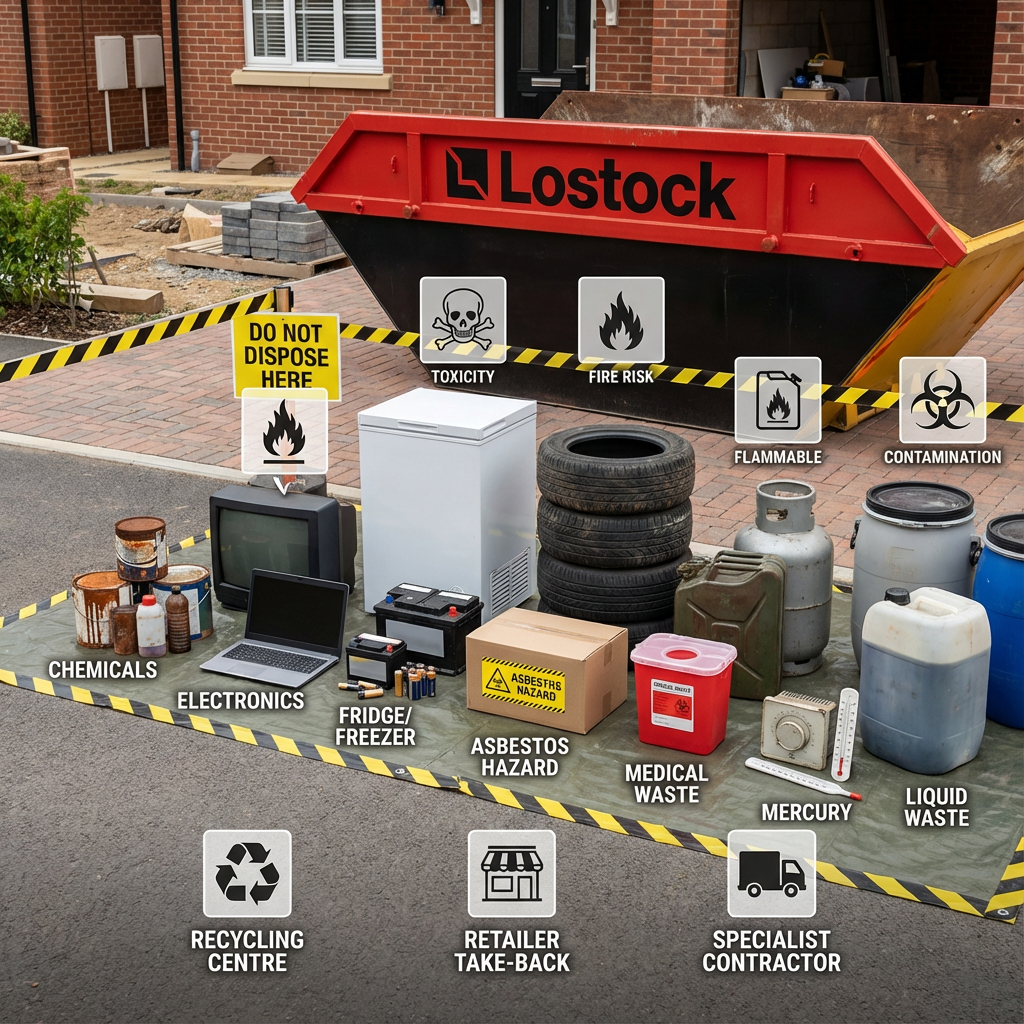
Many typical household and construction items contain hazardous materials that require specialised disposal methods. These 10 items represent the most commonly prohibited materials across UK skip hire companies, selected based on environmental impact, safety regulations, and legal requirements under UK waste management legislation.
1. Hazardous Chemicals and Paint Products
Paints, solvents, acids, pesticides, and cleaning chemicals containing toxic substances pose significant environmental pollution risks. These materials can leak toxic substances that harm both human health and ecosystems, contaminating soil and water supplies.
Solvent-based paints can contaminate up to 1,000 litres of groundwater per litre of paint when improperly disposed of. Even empty containers may be prohibited if not properly cleaned, including white spirit, turpentine, weed killers, and pool chemicals.
Proper disposal prevents groundwater contamination, protects wildlife, and ensures compliance with environmental regulations. Take these items to your local household waste recycling centre, where they’re accepted free of charge for residents.
2. Electrical Items and E-Waste
All electronic devices, including televisions, computers, mobile phones, and small appliances, must be disposed of through specialist recycling channels. E-waste contains hazardous substances like lead, mercury, and cadmium that are non-biodegradable and accumulate in the environment.
The UK generates over 1.5 million tonnes of e-waste annually, yet proper recycling can recover up to 95% of valuable materials including gold and rare earth metals. WEEE (Waste Electrical and Electronic Equipment) regulations require specialist processing.
Retailers must accept old electronics when you purchase new items. Many household waste centres also provide free e-waste collection services, including data destruction for business equipment.
3. Car Batteries and Rechargeable Batteries
All types of batteries contain toxic heavy metals such as lead, mercury, and cadmium that can corrode and leach into the environment. A single car battery can contaminate up to 167,000 litres of water, whilst 95% of lead-acid battery materials can be recycled when properly processed.
The Battery Directive requires retailers to take-back schemes for both household and automotive batteries. Garage forecourts, electronics retailers, and household waste centres all provide free battery disposal services.
Professional recycling recovers valuable metals for reuse whilst preventing acid leakage into soil. Always transport batteries carefully to avoid spillage during disposal.
4. Refrigeration Appliances
Fridges, freezers, air conditioning units, and dehumidifiers contain CFCs, HCFCs, or HFCs that contribute to ozone layer depletion and global warming when released into the atmosphere. F-gas regulations require certified technicians to safely remove refrigerant gases.
Improper disposal can result in fines up to £200,000, whilst professional treatment recovers over 90% of materials. The de-gassing process must be completed before appliances can be recycled through standard channels.
Council collection services typically charge £20-40 for refrigeration appliance removal, including professional gas recovery. Some retailers offer free collection when delivering new appliances.
5. Tyres
All vehicle tyres are difficult to process in standard waste streams and pose environmental hazards when improperly stored. They can trap water, leading to mosquito breeding and present serious fire hazards in landfill sites.
The UK generates approximately 50 million waste tyres annually, with over 85% successfully recycled through proper channels. Tyres can be shredded and reused in construction projects, playground surfaces, and road construction.
Tyre retailers typically charge £1-5 per tyre for disposal when fitting new ones. Many councils also operate tyre collection services at household waste centres, accepting car tyres free of charge for residents.
6. Asbestos-Containing Materials
Any material containing asbestos fibres requires specialist handling to prevent fibre release. This includes roof tiles, pipe insulation, floor tiles, and textured coatings found in buildings constructed before 1980.
Asbestos is a known carcinogen causing mesothelioma and lung cancer. Asbestos-related diseases kill approximately 5,000 people annually in the UK, making proper identification and disposal critical for public health.
Professional testing and licensed removal are mandatory under Control of Asbestos Regulations. Never attempt DIY removal—specialist contractors charge £200-500 depending on quantity and location, but this prevents life-threatening health conditions.
7. Medical and Clinical Waste
Used needles, dressings, pharmaceutical products, and materials contaminated with bodily fluids can contain infectious agents that pose serious health risks. Clinical waste requires controlled treatment using colour-coded containers and licensed carriers.
Improper medical waste disposal can spread diseases like hepatitis and HIV, whilst proper treatment eliminates 99.9% of pathogens. Healthcare facilities, care homes, and individuals managing medical care at home must use approved disposal methods.
Licensed clinical waste carriers provide regular collection services with prices varying by volume. Many pharmacies also accept unwanted medications for safe incineration rather than household disposal.
8. Flammable and Explosive Materials
Petrol, diesel, gas cylinders, fireworks, ammunition, and pressurised aerosol cans pose severe fire and explosion risks. Waste collection vehicle fires often result from improperly disposed aerosols or fuel containers, causing thousands of pounds in damage.
These materials can endanger waste handling staff and damage equipment during transport and processing. Declaring hazardous materials to waste carriers is a legal requirement under dangerous goods regulations.
Gas bottle suppliers operate return schemes for empty cylinders. Household waste centres accept small quantities of fuel and aerosols, whilst specialist hazardous waste facilities handle larger volumes for commercial customers.
9. Fluorescent Bulbs and Mercury-Containing Items
Fluorescent tubes, energy-saving bulbs, and products containing mercury release toxic vapour that persists in the environment for decades. A single fluorescent bulb contains approximately 4mg of mercury—enough to contaminate 7,000 litres of water above safe drinking levels.
Mercury accumulates in the food chain, particularly affecting fish and wildlife. Professional recycling facilities can safely extract mercury whilst recovering valuable materials from bulbs.
Retailer take-back schemes accept old bulbs when purchasing new ones. Household waste centres provide free fluorescent bulb disposal, with separate containers for different bulb types to ensure proper processing.
10. Liquids and Wet Waste
Any liquid waste including oils, antifreeze, paint thinners, and wet materials can leak from skips during transport, contaminating roads and soil. Motor oil contamination can spread over large areas—just one litre can pollute up to one million litres of fresh water.
Wet materials like fresh concrete or plaster add excessive weight, creating handling difficulties and potential safety hazards during skip collection. Most skip hire agreements specifically exclude liquid waste.
Oil recycling facilities accept waste motor oil, hydraulic fluid, and cooking oil for processing into new lubricants. Household waste centres provide free liquid disposal services, whilst absorbent materials help contain small spills.
Planning Your Waste Disposal
When in doubt, contact your skip hire company before loading questionable materials. Most household waste recycling centres accept the majority of these prohibited items free of charge for residents, making advance planning both environmentally responsible and cost-effective.
Understanding these restrictions helps avoid contaminated skip charges, environmental penalties, and potential health hazards. Planning ahead for specialist disposal often proves more economical than dealing with unexpected fees or legal issues.
For guidance on suitable skip contents and local disposal facilities in the Lancashire area, contact experienced commercial waste disposal professionals who can advise on the most appropriate disposal methods for your specific requirements.
Quick Reference: Disposal Options
| Item Type | Main Hazard | Best Disposal Method | Typical Cost |
|---|---|---|---|
| Paint/Chemicals | Environmental contamination | Household waste centre | Free for residents |
| Electronics | Toxic metals | Retailer take-back/recycling centre | Usually free |
| Batteries | Heavy metal leaching | Battery collection points | Free |
| Refrigeration | Ozone depletion | Professional de-gassing service | £25-50 |
| Tyres | Fire/environmental hazard | Tyre retailer/council collection | £1-5 per tyre |
| Asbestos | Serious health risk | Licensed specialist removal | £200-500 |
| Medical waste | Disease transmission | Clinical waste contractor | Varies by volume |
| Flammables | Fire/explosion risk | Specialist hazardous waste facility | Varies |
| Mercury items | Toxic contamination | Household waste centre | Free for residents |
| Liquids | Leakage/contamination | Appropriate liquid waste facility | Varies by type |