 By
By
Streamline Your Building Project with a Reliable Skip Hire Company
Skip hire is more than a bin on site. Used properly, it becomes a core part of how you control waste, keep work moving, and stay on the right side of UK regulations.
Understanding the Role of a Skip Hire Company in Building Projects
Keeping your site clear and productive
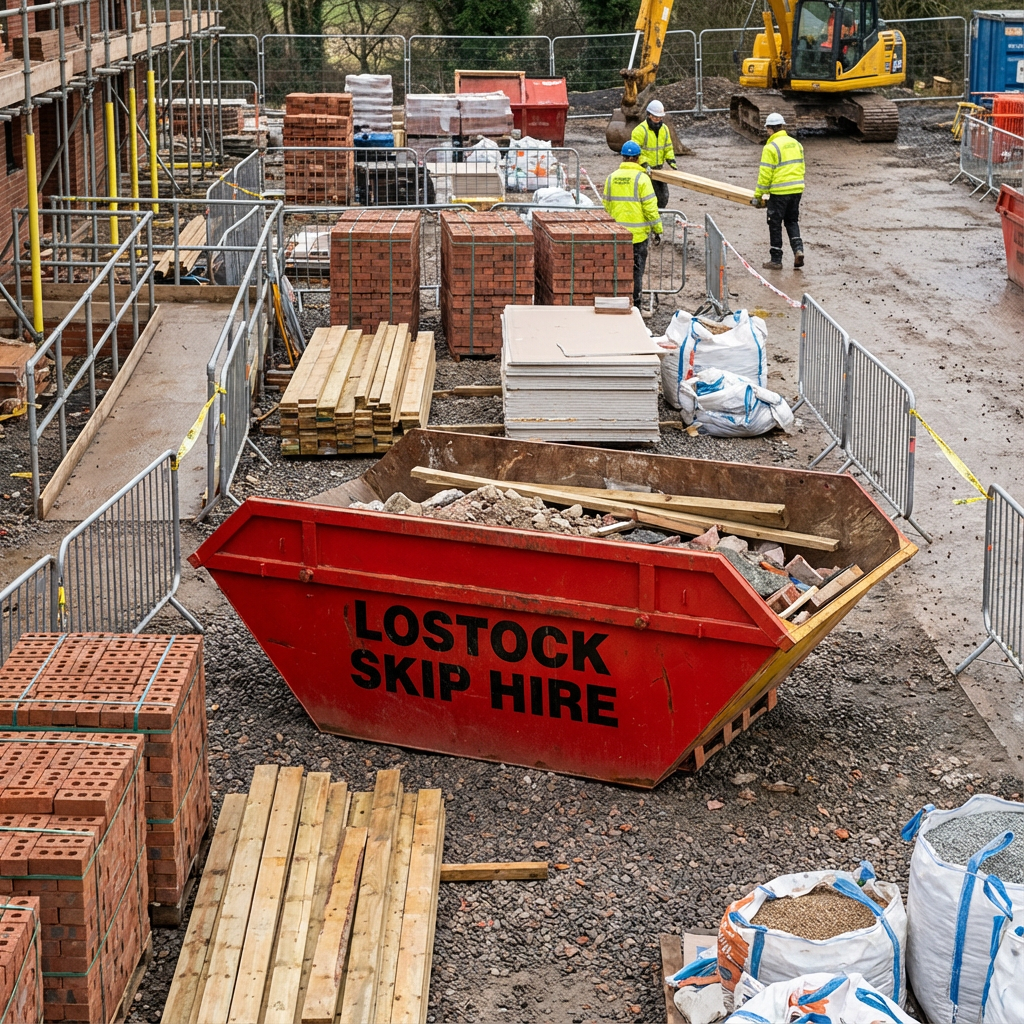
On a live build, waste accumulates quickly. Brick offcuts, packaging, timber, old fixtures, and general rubbish can quickly choke access routes and slow trades. A reliable skip hire company provides a planned outlet for waste, so your team is not wasting time shifting piles around the site.
With the right skips in place, you can:
- Maintain safe access for plant, deliveries, and trades
- Reduce double handling by loading waste straight into the skip
- Free up labour hours that would otherwise go on ad hoc clearances
- Present a tidy site, which supports inspections and client visits
Supporting project timelines and sequencing
Skip hire ties directly into your programme. If exchanges or collections are delayed, demolition, strip-out, or fit-out phases can stall. A good skip hire partner understands construction schedules, peak waste periods, and access constraints, and plans services around them.
This means you can align skip delivery and collection to key milestones. For example, you might plan collections around [insert phase] or [insert activity] to avoid skips overflowing and trades standing around. When your provider communicates clearly and offers short-notice adjustments, you protect your critical path and reduce downtime.
Managing compliance and your Duty of Care
Under UK waste regulations, you remain responsible for how your site waste is handled, from the point it leaves the plot to its final treatment. A professional skip hire company helps you meet that Duty of Care.
In practice, that includes:
- Correct waste classification and segregation guidance at the booking stage
- Licensed waste carriage and disposal that meets current legislation
- Proper documentation, such as waste transfer notes and, where required, consignment paperwork
- Compliance support so your site managers know what can or cannot go in each skip
By choosing a specialist in construction skip hire, you keep waste moving, reduce the risk of regulatory issues, and give your team a simple, repeatable process for every project.
Choosing the Right Skip Size for Your Building Project
Start with the scope and waste type.
Skip size selection should follow your programme, not be based on guesswork. Before you book, map the works that will generate waste, such as strip out, groundworks, shell, or second fix. Then consider the main waste streams, for instance, masonry, timber, packaging, or mixed construction waste.
As a simple rule, heavier and bulkier waste needs larger skips or higher-capacity containers. At the same time, lighter but awkward items can often be loaded into smaller builders’ skips if loaded correctly. Speak with your provider about weight limits for each size to avoid overfilled or overweight containers.
Common skip size categories for construction
Terminology varies slightly by region, but most construction projects in the UK work with these broad categories:
- Small and midi skips that suit tight sites, minor internal works, or short phases with limited waste.
- Standard builders’ skips are used on most residential and light commercial jobs, suitable for mixed construction and demolition waste within agreed limits.
- Larger maxi or roll-on/roll-off containers for high volumes of rubble, soil, or demolition arisings on bigger or longer duration projects.
If your project is running multiple trades simultaneously, it is often more efficient to use a larger skip and schedule more frequent exchanges than to juggle several smaller units.
Practical framework to avoid over- or undersizing
Use this simple framework before each booking:
- List project phases that will generate waste.
- Estimate volume for each phase using site drawings, strip-out schedules, or a standard internal checklist.
- Match to skip categories based on whether the waste is mainly heavy inert material, mixed light construction waste, or a combination.
- Check access and permit constraints, since tight access or highway placement can limit the size you can safely use.
- Plan exchanges around your programme so skips never sit full while labour stands down.
If you are unsure, a brief call with a construction-focused provider can help you avoid overpaying for unused capacity or halting work while you wait for an extra skip. For a broader breakdown of builders’ skip options, you can use guides such as builders’ skip hire explained as a planning reference.
Accepted Construction Waste and Waste Classification
Main construction waste types that usually can go in a skip
Most building projects generate a mix of waste streams. If you classify them correctly at the booking stage, you keep costs under control and avoid rejected loads.
Typical categories of construction and demolition waste that skip hire companies commonly accept include:
- General construction waste such as packaging, plastics, insulation offcuts, plasterboard (often in dedicated skips or segregated), non-contaminated fixtures, and mixed light waste from internal works.
- Hardcore and inert waste such as bricks, blocks, concrete, tiles, ceramics, and non-contaminated rubble. Many providers prefer this in dedicated inert skips so it can be processed efficiently.
- Timber and wood products such as joists, sheet materials, doors, skirtings, and treated or painted timber are subject to local acceptance rules.
- Metals such as steel, aluminium, copper pipe, and cable containment. You can usually place metals in mixed construction skips or in separate metal-only containers where volumes justify it.
- Soil and subsoil from excavations, where it is non-contaminated and free from invasive species or hazardous content.
Precise classification at the outset avoids disputes at collection.
Hazardous and restricted construction waste
Certain materials are hazardous or require special handling. These must be identified early so they do not end up in a standard builders’ skip.
Typical items that are restricted or need separate arrangements include:
- Asbestos-containing materials require licensed removal, specialist packaging, and dedicated consignment routes.
- Paints, solvents, resins, and adhesives, mainly where liquid or part is used.
- Oils, fuels, and contaminated rags or absorbents.
- Gypsum-based waste, such as plasterboard, is mixed with other waste streams in excess of permitted limits.
- Electrical items and appliances covered by WEEE regulations.
- Gas cylinders, pressurised containers, and batteries.
Your skip provider should flag what is permitted in each container and where hazardous consignment notes will be required.
Simple framework for compliant waste classification
To keep your site compliant with UK waste rules, use a short pre-start check before you order skips for any project:
- List likely waste streams by phase, for instance, strip out, demolition, and fit out.
- Flag any materials with potential hazards, such as suspected asbestos, contaminated soil, or chemical residues.
- Agree skip types and segregation with your provider, including any dedicated inert, timber, or plasterboard skips.
- Brief site teams on what can and cannot go in each skip, and who to tell if restricted materials are found.
- Record classifications and carriers so your Duty of Care paperwork stays complete and audit-ready.
If you need a wider planning framework for construction waste, you can use resources such as construction waste management best practices as a reference when setting up your next project.
Flexible Collection and Delivery Options to Suit Project Timelines
Rapid delivery that matches your programme
On a live site, you often need skips in hours, not days. A construction focused skip hire service offers rapid delivery slots that fit around site access, crane operations, or key deliveries. You agree clear time windows at booking stage so wagons arrive when gates are open, banksmen are available, and other logistics are not blocked.
For tighter sites or busy roads, timed deliveries avoid skips sitting in the wrong place while you wait for plant to move, or traffic to ease. Many contractors also use wait and load services for constrained locations, where the driver waits on site while the team loads, then removes the skip immediately so no container is left down.
Scheduled exchanges and collections
To keep waste flowing, you need more than one off bookings. A good provider will help you pre plan exchanges around your programme, for instance at the end of [insert phase] or before a major delivery of materials. This reduces the chance of skips filling early and trades standing down while you chase collections.
Useful options often include:
- Regular exchange schedules, where skips are swapped on set days each week.
- On call exchanges with agreed response times, so you know how long a full skip will sit before removal.
- Out of hours or early morning slots where local rules and access allow, to protect daytime productivity.
If you want more detail on planning hire periods, frameworks such as skip hire period guidance can support your internal procedures.
Multi phase and multi skip contracts
Most construction projects in the UK run through several waste intensive phases. Rather than booking skips ad hoc, you can set up a multi phase skip schedule that mirrors your programme. For example, one pattern for demolition, another for shell works, and another for fit out. You agree approximate volumes, skip types, and frequency, then adjust as works progress.
On larger or multi plot schemes, it is often efficient to combine:
- Base level skips that stay on site throughout, such as mixed construction or inert containers.
- Short term extra capacity during heavy phases, such as strip out or external works.
- Roll on roll off containers for bulk waste, supported by standard builders skips for day to day arisings. Guidance such as large container hire information can help when specifying these.
The aim is simple, to keep waste removal aligned with your build programme so you protect labour productivity, avoid downtime, and maintain a clear, compliant site throughout the project.
Permits, Site Safety, and UK Waste Compliance Made Simple
When you need a skip permit and how to get it
If a skip sits on a public road or highway, you usually need a permit from the local council. If it is fully on private land, such as a compound or plot, you typically do not. The simplest approach is to agree placement with your skip provider at booking stage, then let them handle the permit application where it is required.
A practical framework for permits:
- Confirm location in your logistics plan, including access routes, traffic management, and crane or plant movements.
- Check if it is highway or private land, and flag any controlled parking zones or restrictions.
- Agree permit duration and start date with your provider, aligned to your programme.
- Record the permit reference in your site file so supervisors and traffic marshals can refer to it.
Many construction focused skip companies offer a permit handling service. You can also use guidance such as skip hire permit information when planning early stages of a project.
Safe placement and loading on site
Good skip placement protects your workforce, the public, and your schedule. Position skips on level, stable ground, away from overhead obstructions, and where plant can access them without tight reversing.
Key safety points include:
- Clear sight lines for drivers and plant operators, with banksmen where required.
- Segregation from pedestrian routes using barriers, signage, or marked walkways.
- Correct lighting and road cones where skips sit on or near the highway.
- No overfilling, waste should not project above the sides or hang off the ends.
- No unsafe items such as gas bottles, loose sheets that can blow away, or unsecure heavy objects stacked high.
Your teams should load heavier material first and keep it level. For more detailed guidance, many contractors use references such as skip hire safety guides within their site inductions.
Staying compliant with UK waste duty of care
Under UK law, you have a Duty of Care for all waste produced on your site. That duty covers classification, segregation, transport, and final disposal. Using a licensed skip provider helps, but you still need clear internal controls.
Use this compliance checklist on each project:
- Classify your waste before booking, and identify any hazardous or special streams.
- Verify carrier licences for your skip provider and any subcontract waste operators.
- Complete waste transfer notes for non hazardous waste, and consignment notes for hazardous loads.
- Keep documentation organised, including permits, licences, and transfer notes, for at least the minimum retention period set by current regulations.
- Brief supervisors so they know what can go in each skip and when to refuse a collection or stop loading.
Good paperwork and clear lines of responsibility protect your project from enforcement action and unplanned costs. When your skip hire partner understands construction and waste legislation, compliance becomes another routine part of site setup rather than a last minute headache.
Ensuring Reliability and Minimising Downtime with Professional Skip Hire
Why reliability matters on a live build
Skipped collections, missed delivery slots, or the wrong container on site will hit your programme hard. Labour waits, plant stands idle, and access routes close up. Reliable skip hire is not about the cheapest day rate, it is about keeping your schedule intact.
A professional provider treats skips as part of your site logistics, not an afterthought. You agree clear service levels at the outset, including response times, contact routes, and escalation if something slips. That structure keeps waste moving, even when the project is under pressure.
The value of local knowledge
Strong local knowledge cuts risk and delay. A construction focused skip company that knows the local roads, traffic patterns, and council rules can plan realistic delivery windows and permit lead times. They understand common pinch points, such as school runs, weight restrictions, or streets that need smaller vehicles.
This local insight feeds into your logistics planning. You can position skips where wagons can genuinely reach them, choose suitable container sizes for tight access, and agree realistic collection slots that fit with other site activities. For more planning support, you can reference guides such as construction skip hire best practices when setting up new jobs.
Responsive communication and clear points of contact
On a busy project, you do not have time to chase unknown numbers or wait for call backs. A dependable skip hire partner gives you:
- A named contact for bookings, changes, and problem solving.
- Direct communication channels that supervisors can use from site.
- Proactive updates if traffic, breakdowns, or access issues affect planned times.
Quick, clear communication means you can adjust labour, resequence minor tasks, or open alternative access while the skip issue is resolved, rather than losing half a shift.
Contingency planning that keeps waste moving
Even with the best planning, issues arise. Vehicles fail, weather closes roads, a phase produces more waste than expected. Your skip hire provider should have practical contingencies, for instance:
- Backup vehicles or partners to maintain collections if a wagon is off the road.
- Wait and load options if permits, parking, or security restrict drop off.
- Short notice extra capacity when demolition or strip out volumes spike.
On multi phase or multi plot schemes, it helps to agree a simple escalation path in your pre start meeting. Who can authorise extra skips, who signs off changes to collection patterns, and how costs are recorded. That preparation stops minor issues turning into downtime.
The right skip hire partner behaves like part of your site team. With local knowledge, responsive communication, and clear contingencies, you keep waste under control and your project running to programme. Resources such as construction skip hire services can support your internal procurement checks when selecting a provider.