 By
By
7 Essential Skip Hire Planning Steps for Small Businesses
Small businesses generate surprising amounts of waste – from office refurbishments and seasonal clearances to construction debris and excess stock. Yet many business owners find themselves making countless trips to the tip, wasting valuable time and money that could be better invested in growing their enterprise.
Effective waste management is crucial for small businesses, impacting everything from workplace safety and professional appearance to legal compliance and operational costs. Without proper planning, skip hire can become an expensive mistake rather than a cost-effective solution.
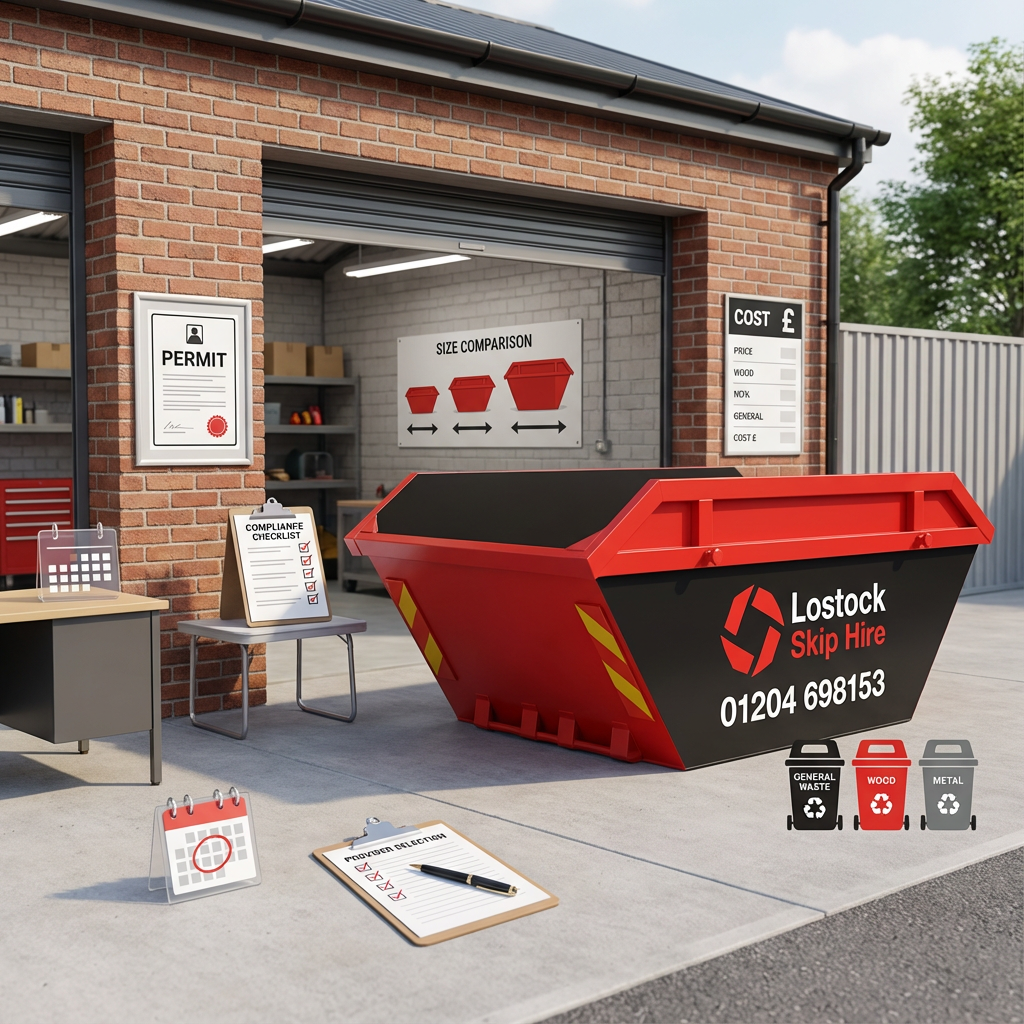
This guide covers the seven essential planning areas that determine successful business skip hire – from legal requirements and cost control to practical logistics and environmental compliance. Each element has been selected based on its impact on both operational efficiency and bottom-line costs.
We’ll walk through permit requirements, skip sizing strategies, compliance obligations, cost optimisation, placement logistics, waste segregation, and provider selection – giving you a complete framework for making informed skip hire decisions that support your business operations.
1. Understanding Legal Requirements and Permit Obligations
Skip permits and legal compliance form the foundation of any business skip hire, with non-compliance potentially resulting in fines and operational disruptions. Legal compliance is non-negotiable for businesses, and permit requirements can add significant time and cost if not properly planned.
Skip permits are required for placement on public roads or pavements, with permit fees averaging £30 and approval taking several days to a week. Duration limits typically restrict public road placement to 1-2 weeks, making timing crucial for project planning.
Permit fees range from £15 to £60 depending on location, with urban areas commanding higher fees due to space constraints and traffic management requirements. London and major cities often charge premium rates, whilst rural areas offer more affordable options.
This planning step is essential for businesses with limited private space who need to use public areas for skip placement. The application process requires advance planning, with local authorities requiring site details, duration requirements, and sometimes traffic management assessments. Penalty costs for non-compliance can exceed £500, making proper planning financially critical.
2. Choosing the Right Skip Size for Business Needs
Selecting appropriate skip capacity directly impacts cost-effectiveness, with undersized skips requiring additional hires and oversized skips wasting money on unused capacity. Skip size selection affects both immediate costs and operational efficiency, making it crucial for budget management and project planning.
Mini skips (2-3 yd³) cost £75-£175 per week and suit small office clearances or equipment disposal. Midi skips (4-5 yd³) range from £130-£320 per week, accommodating moderate renovations or seasonal stock clearances. Builder skips (6-8 yd³) cost £190-£450 per week for construction projects or major clearances.
A 4-yard midi skip typically accommodates the equivalent of 35-40 black bin bags, making it suitable for small office refurbishments or seasonal stock clearances. Weight limits vary by skip size, with smaller skips handling denser materials more cost-effectively.
Volume estimation techniques include measuring waste area and applying conversion factors. Construction debris requires larger skips due to bulky materials, whilst office waste compacts efficiently into smaller containers. Consider project timeline when sizing – longer projects may benefit from larger skips to avoid multiple collections.
3. Mastering Waste Segregation and Compliance Requirements
Proper waste classification and segregation ensure legal compliance whilst avoiding additional charges for prohibited or hazardous materials. Incorrect waste disposal can result in legal penalties, environmental damage, and unexpected costs that significantly impact small business budgets.
Hazardous waste requires specialist disposal, including batteries, chemicals, electrical items, and fluorescent lighting. Prohibited materials encompass asbestos, medical waste, food waste, and liquid substances. Weight restrictions and material-specific limitations vary by skip type and waste classification.
Electrical items and large appliances cannot be placed in standard skips, so they require separate WEEE-compliant disposal routes that businesses must arrange independently. This includes computers, printers, refrigeration equipment, and electronic components common in business operations.
Documentation requirements include waste transfer notes and duty of care compliance. Businesses handling diverse waste streams, particularly those in construction, retail, or manufacturing sectors, must maintain detailed records of disposal methods and destinations. Environmental responsibility guidelines require proper classification and appropriate disposal routes for all business waste streams.
4. Strategic Cost Management and Budget Planning
Skip hire costs extend beyond basic rental fees, encompassing permits, overweight charges, extended hire periods, and waste-type premiums that can significantly impact budgets. Effective cost control requires understanding all potential charges upfront, enabling accurate budgeting and preventing unexpected expenses.
Base rental fees vary by size and duration, with 7-14 day standard periods providing cost-effective solutions for most business projects. Location premiums in urban areas reflect higher disposal costs and congestion charges, whilst rural areas offer more competitive rates.
London skip hire costs average 20-30% higher than surrounding areas, with permit fees reaching £60 compared to £15 in rural locations. Additional charges apply for heavy materials like concrete or soil, extended hire periods beyond standard terms, and specialist waste requiring alternative disposal routes.
Hidden costs include overweight penalties, typically charged per tonne above specified limits. Seasonal variations affect pricing, with spring and summer commanding premium rates due to increased demand. Small businesses operating on tight margins benefit from detailed cost breakdowns and transparent pricing structures when selecting providers.
5. Optimising Placement and Access Planning
Strategic skip placement maximises convenience whilst minimising disruption to business operations, customer access, and daily workflows. Poor placement decisions can impact customer experience, staff productivity, and operational efficiency, ultimately affecting business performance.
Private property placement eliminates permit requirements and time delays, whilst providing unlimited access for efficient waste disposal throughout the hire period. Vehicle access requirements include adequate width for delivery vehicles (typically 3 metres) and overhead clearance for lifting equipment.
Consider the impact on customer access, parking availability, and daily business operations when planning placement. Retail businesses must balance waste management needs with customer convenience, often requiring careful timing and positioning strategies.
Site preparation includes level surfaces for stable placement and protection of property surfaces. Access measurement guidelines require accurate assessment of delivery routes, including narrow gateways, overhead obstacles, and ground conditions. Neighbour considerations may require advance notification, particularly for longer hire periods or busy commercial areas.
6. Environmental Compliance and Sustainability Planning
Environmental responsibility and recycling compliance are increasingly important for business reputation, legal requirements, and cost management. Environmental compliance affects business reputation, meets growing customer expectations, and often provides cost benefits through recycling incentives.
Licensed waste carriers ensure compliant disposal routes with proper documentation and environmental certifications. Recycling maximisation reduces landfill costs and environmental impact, with licensed operators typically achieving 90%+ recycling rates for mixed business waste.
Documentation requirements include waste transfer notes detailing disposal destinations and recycling outcomes. Businesses with sustainability commitments benefit from providers offering detailed recycling reports and environmental impact assessments.
Environmental certification options include ISO 14001 accredited disposal routes and carbon footprint reporting. Integration with broader business sustainability strategies supports corporate social responsibility requirements and customer expectations. Licensed verification ensures compliance with environmental regulations whilst supporting business sustainability objectives.
7. Provider Selection and Service Optimisation
Choosing the right skip hire provider ensures reliable service, competitive pricing, and expert support tailored to business needs. Provider selection determines service quality, reliability, and overall experience, directly impacting business operations and satisfaction.
Service area coverage ensures reliable delivery and collection within business timescales. Delivery reliability affects project schedules and operational planning, making provider reputation and track record crucial selection factors.
Flexible hire periods accommodate variable project timelines, with some providers offering 15-day standard periods instead of typical 7-day minimums. Extension options provide project flexibility without penalty charges or complicated rebooking processes.
Quote comparison strategies should evaluate total costs including potential additional charges, service levels, and expert support quality. Service level agreements clarify delivery times, collection schedules, and customer support availability. Emergency collection options provide business continuity support for urgent requirements, whilst long-term provider relationships often secure better rates and priority service for regular customers.
Quick Reference Planning Checklist
| Planning Area | Key Questions | Time Required | Cost Impact |
|---|---|---|---|
| Legal Requirements | Permit needed? Public placement? | 1-2 weeks | £15-£60 |
| Skip Sizing | Volume estimate? Weight considerations? | Same day | £75-£500+ |
| Waste Compliance | Prohibited materials? Hazardous waste? | Ongoing | Variable |
| Cost Planning | Total budget? Hidden charges? | 1-2 days | 10-30% premium |
| Placement Strategy | Private space? Access requirements? | Same day | Permit savings |
| Environmental | Licensing? Recycling targets? | Ongoing | Reputation value |
| Provider Selection | Service quality? Reliability record? | 2-3 days | Long-term savings |
Successful business skip hire requires careful attention to legal compliance, accurate sizing, waste segregation, cost management, strategic placement, environmental responsibility, and provider selection. Start with legal requirements and sizing needs, then work through cost planning and placement logistics before selecting providers.
Invest time in upfront planning to avoid costly mistakes, compliance issues, and operational disruptions. The seven areas covered here provide a comprehensive framework for making informed decisions that support business efficiency and cost control.