 By
By
How Long Can You Keep a Skip? Complete Hire Period Guide
You’ve booked your skip, but now you’re wondering: how long do you actually have to fill it before collection? Many people underestimate or overestimate the time needed for their project, leading to rushed clearances or expensive extension fees. Understanding skip hire periods helps you plan efficiently and avoid unexpected costs.
This guide covers standard hire periods across different project types, company policies, and regional variations, based on industry standards and authentic customer experiences. We’ll explore typical hire durations, factors affecting your rental period, extension options, and practical tips to maximise your skip rental time.
1. Standard Skip Hire Periods: The Industry Norm
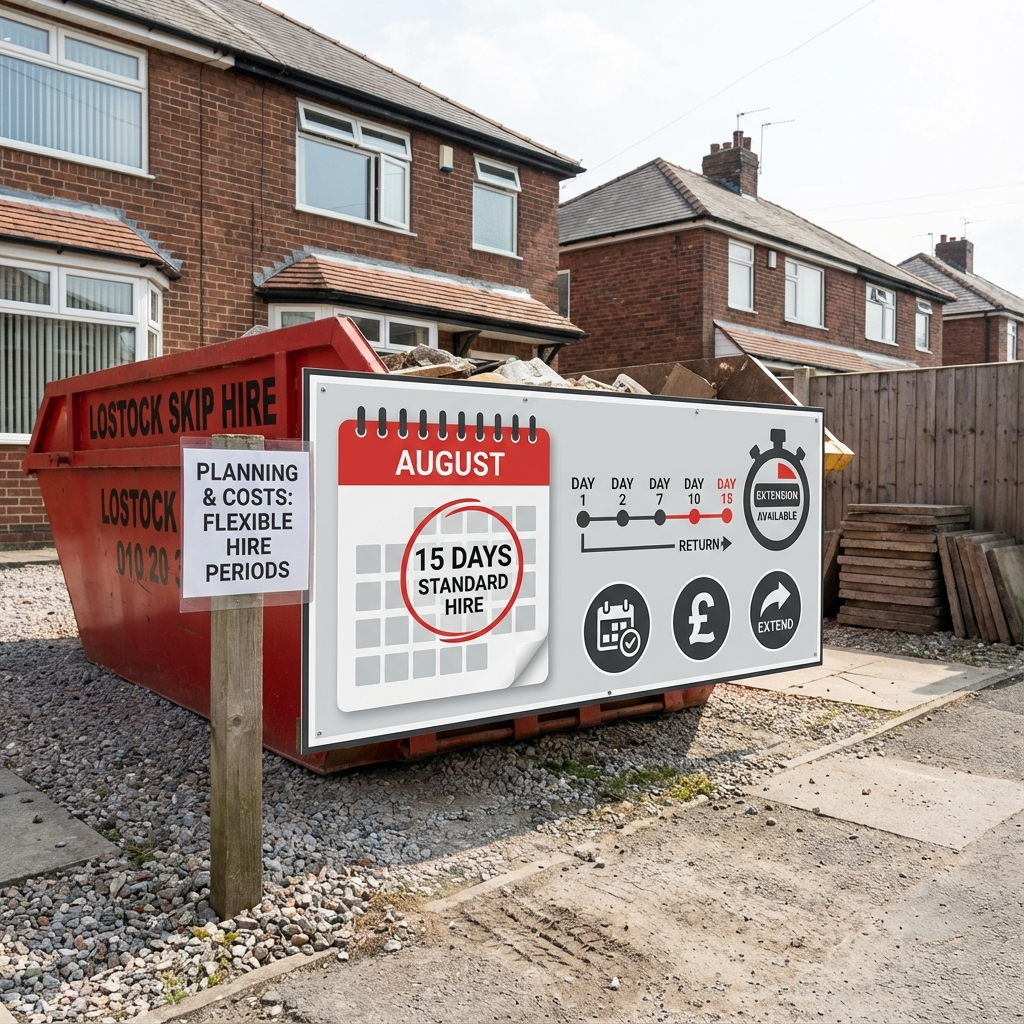
Most skip hire companies offer standard rental periods ranging from 7 to 14 days, with 15 days being the most common across the UK. Understanding these baseline hire periods helps you plan projects and compare company offerings effectively.
The consistency in industry practice makes comparison shopping easier, with built-in flexibility for typical project timelines. 70% of residential skip hires are completed within standard 14-day periods, making this timeframe suitable for most household projects.
This duration works best for first-time skip hirers and standard home renovation projects.
Companies like Lostock Skip Hire offer a generous 15-day standard period, longer than many competitors who typically offer 7-10 days. Regional variations exist, with some areas providing shorter 7-day periods for smaller projects.
2. Project Type Determines Duration Needs
Different types of work require vastly different timeframes, from quick 3-day household clearances to month-long construction projects. Matching the hire period to the project type prevents rushed work or unnecessary extension fees.
Small clearances typically need 3-7 days, whilst home renovations require the standard 7-14 days. Construction projects often need 14-28+ days due to their complexity and scale. Garden clearances usually take 5-10 days due to seasonal restrictions and council green waste collection schedules.
Anyone planning specific project types benefits from realistic timeframe expectations. Seasonal considerations can affect timing – for instance, garden waste disposal may face delays during peak autumn months when councils handle increased volumes.
3. Skip Size Affects Hire Duration
Larger skips are typically hired for more extended periods, as they’re used for bigger projects that naturally take longer to complete. Skip size selection directly impacts both project timeline and rental costs.
Mini skips (2 yards) often come with 7-day rentals for quick jobs, whilst midi skips (4 yards) follow standard 14-day periods. Large skips (8+ yards) usually require 14-28 days to accommodate the substantial projects they serve.
A 4-yard skip might be hired for 7 days for a small bathroom renovation, whilst an 8-yard skip for a kitchen extension might need 14-21 days. The size-to-duration ratio helps optimise both project efficiency and cost-effectiveness.
4. Permit Requirements Can Extend or Limit Periods
Skips on public roads require council permits, which typically last 7-28 days and can influence your hire duration options. Permit duration often dictates the maximum hire period for roadside placement, significantly affecting project planning.
Council permits are typically valid for 14-28 days, though private property placement removes permit time restrictions entirely. Some areas offer permit extensions for longer projects, but availability varies by local authority.
Many councils issue 28-day permits, but some restrict them to 14 days during busy periods or in narrow streets. Anyone considering roadside skip placement should check permit duration requirements before booking, as this often determines the maximum practical hire period.
5. Extension Options and Additional Charges
Most companies offer hire period extensions, typically charged per day or week beyond the standard period. Understanding extension policies prevents project delays and helps budget for potential overruns.
Daily extension rates typically range from £5-£15 per day, with weekly extensions often more cost-effective. Advance notice is usually required for extensions, with a minimum of 24-48 hours’ notice.
Extension fees can add £35-£105 per week to your hire cost, making upfront, more extended hire periods more economical than multiple extensions. Projects with uncertain timelines benefit most from understanding these policies before starting work.
6. Waste Type Influences Collection Timing
Different types of waste require different processing and disposal methods, which can affect how quickly collection can be arranged. Hazardous or specialised waste may require more extended hire periods due to disposal complexity.
General waste follows standard collection timing, whilst garden waste may need seasonal consideration spanning 5-10 days. Mixed materials can require sorting that extends hire periods, and hazardous waste needs special handling that may affect timing.
Asbestos-containing waste requires specialist licensed disposal, potentially extending hire periods by several days for proper handling. Projects involving mixed waste types should factor in additional time for proper categorisation and disposal procedures.
7. Early Collection vs Late Collection Policies
Most companies offer flexibility for both early collection (when you’ve finished early) and late collection (when you need more time). Understanding both collection options helps optimise costs and project timing.
Early collection is often available with advance notice, whilst late collection policies vary significantly between companies. Some companies offer partial refunds for significantly early collection, making efficient project completion financially rewarding.
Requesting early collection with 24-48 hours notice can sometimes reduce costs, whilst same-day collection requests may incur additional fees. Efficient project managers benefit from understanding these policies to optimise both timing and costs.
Quick Reference Guide
| Project Type | Typical Duration | Skip Size | Key Considerations |
|---|---|---|---|
| Household clearance | 3-7 days | Mini-Midi | Quick fill, early collection possible |
| Home renovation | 7-14 days | Midi-Maxi | Standard periods sufficient |
| Construction | 14-28+ days | Large-RoRo | Permits, extensions likely needed |
| Garden clearance | 5-10 days | Mini-Midi | Seasonal disposal considerations |
Skip hire periods typically range from 7-15 days standard, but your actual needs depend on project type, skip size, location, and waste type. Start with realistic project timeline estimates, add buffer time for unexpected delays, and choose companies offering flexible extension options.
Consider longer initial hire periods over extensions for better value – a few extra days of hire often cost less than rush fees or project delays. Contact your local skip hire company to discuss your specific project timeline and explore flexible hire options that match your needs.